Stop showing up out of obligation to places that drain you. You do not have to keep attending things just because saying no feels uncomfortable. Here is why it happens and how to change it now.
Women who stop showing up out of obligation do not become antisocial or unkind. They become more genuinely present in the places they actually choose to be. This post shows you exactly how to tell the difference and what to do about it.
How Many Times Have You Said Yes to Being Somewhere You Did Not Want to Be?
Smiling. Nodding. Saying the right things. Keeping the conversation light. Keeping the mood easy. Keeping yourself contained.
And then leaving feeling more drained than when you arrived.
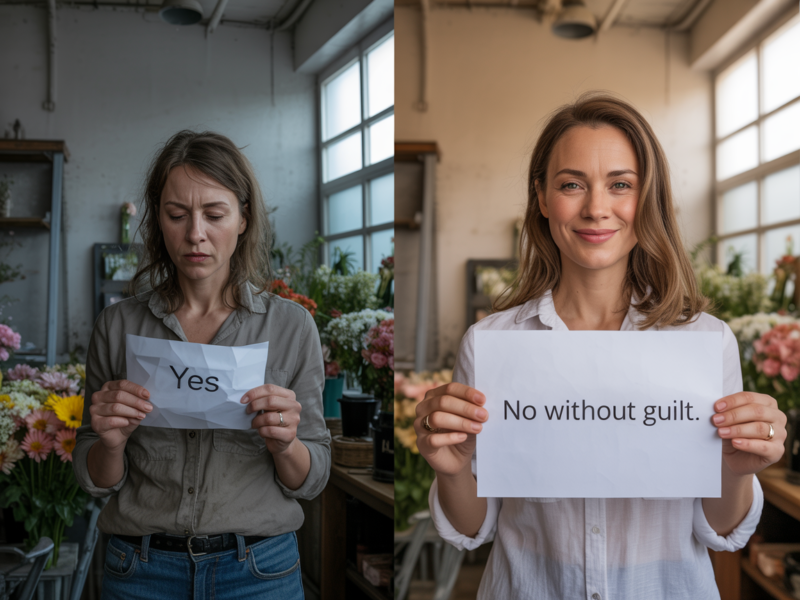
Not because anything terrible happened. Not because the people were unkind or the evening was difficult in any obvious way. Just because you were not really there. A part of you stayed quiet the whole time. The part that knew, from the moment you said yes, that you did not actually want to go.
But you went anyway.
Not because you had to. Because saying no felt more uncomfortable than showing up. Because the guilt of declining felt heavier than the cost of being somewhere you did not want to be. Because you are the kind of woman who shows up, and showing up has become so automatic that you sometimes forget you are allowed to choose not to.
If that sounds familiar, this post is for you.
Why You Keep Showing Up Out of Obligation
It did not start as a pattern you chose. It started as a series of individual decisions that each seemed reasonable at the time.
The first yes was genuine. The event sounded nice, the people mattered, the occasion felt worth attending. You went and you were glad you did.
But then another invitation arrived. And this time you were tired. Or you had other things you wanted to do. Or something in you just did not want to go.
And still you said yes. Because you did not want to disappoint anyone. Because not going felt harder to explain than going. Because the guilt of saying no arrived immediately and the relief of having protected your evening would only arrive later, quietly, and be easy to miss.
So you went. And you got through it. And you came home more depleted than you left.
And the next invitation arrived. And you said yes again.
Because somewhere along the way, showing up out of obligation stopped feeling like a choice and started feeling like simply what you do. What kind of person you are. The one who shows up. The one who makes the effort. The one who keeps the mood easy and the conversation light and herself contained.
Until one day you realise that you cannot quite remember the last time you went somewhere and felt genuinely glad to be there.
What Showing Up Out of Obligation Actually Costs You
The individual event does not feel like a significant cost. One evening. A few hours. Not that bad.
But the pattern has a cost that the individual event conceals.
It drains energy you did not have to spare. Performing ease and warmth and engagement in a room where part of you is absent requires a specific kind of effort. It is not the effort of genuine connection. It is the effort of managing how you appear. And that effort is exhausting in a way that actual enjoyment never is.
It takes time from things that actually fill you. Every evening spent somewhere you did not want to be is an evening not spent somewhere you did. Or in the quiet that you needed. Or on the project you keep postponing. Or simply resting in a way that would have actually restored you.
It teaches the people around you that your yes is automatic. When you always show up regardless of whether you want to, people stop thinking of your attendance as something that required a genuine choice. They assume it. And assumptions, unchallenged long enough, become expectations.
It keeps you slightly hidden. The contained version of you, the one who keeps herself managed and easy and appropriate, is not the full version of you. And spending significant amounts of your social time being that version, in places that do not invite anything more, is a slow, quiet kind of diminishment.
Research on social obligation and emotional exhaustion consistently shows that attending social events out of guilt rather than genuine desire produces significantly higher levels of emotional fatigue than simply staying home, even when the event itself is pleasant. You left feeling more drained than when you arrived because showing up out of obligation was genuinely costly, even when nothing obviously went wrong.
The Difference Between Choosing to Go and Feeling You Have To
This distinction matters more than it might seem at first.
When you choose to go somewhere, genuinely choose it, something is different. You arrive with more of yourself available. You are present rather than managed. The conversation goes somewhere real rather than staying carefully light. You leave feeling connected rather than depleted.
When you go because saying no felt harder than going, the opposite is true. You spend the whole time with part of yourself held back. You manage the mood rather than contributing to it. You stay longer than you want to because leaving early feels awkward. And you come home having spent a significant amount of your limited time and energy on something that gave very little back.
The difference is not about the event. It is about whether you actually chose to be there.
And choosing, genuinely choosing, requires that saying no is a real option.
For most women, it does not feel like one.
Why Saying No to Social Obligations Feels So Hard
Understanding the obstacle honestly is the first step toward clearing it.
The guilt is immediate. The moment you consider not going, the guilt arrives. You imagine the disappointment. The awkward explanation. The sense of having let someone down. That immediate discomfort makes saying yes feel like the path of least resistance, even when the cost of yes is greater than the cost of no.
You do not want to be seen as difficult. The woman who declines invitations, who says not this time, who protects her evenings, risks being seen as antisocial or unfriendly or simply not a good enough friend. That perception, however unfair, feels like a real professional and social risk.
Showing up is part of your identity. If being reliable and present and the kind of person who makes the effort is central to how you understand yourself, saying no feels like a betrayal of who you are. Not just a social decision. An identity-level threat.
You minimise the cost. It is only one evening. It will not be that bad. I can manage it. These thoughts are not wrong, exactly. But they consistently undercount the cumulative cost of a pattern built from individual occasions that each seemed manageable on their own.
All of this is real. And none of it means you are obligated to keep going. You can stop showing up out of obligation.
5 Ways to Start Protecting Your Presence
You do not need to stop attending things you actually want to attend. You need to start noticing the difference between wanting to go and feeling you have to, and acting on that difference.
1. Ask the honest question before you respond. Do I actually want to go to this? Not: should I go? Not: will people be disappointed if I do not? Just: do I want to? If the honest answer is no, that answer deserves to be taken seriously.
2. Introduce a delay before responding. Instead of saying yes immediately, try: “Let me check my diary and come back to you.” This creates a moment of genuine choice rather than an automatic response. And in that moment, you can ask the honest question.
3. Practice the warm no. “I am not going to make it to this one but thank you so much for thinking of me.” No lengthy explanation. No excessive apology. No promise to make it up. A warm, clear, complete answer.
4. Notice how you feel after events. Start paying attention to which social occasions leave you feeling fuller and which leave you feeling more depleted. This information is not a verdict on the people involved. It is data about which invitations are worth saying yes to and which ones are costing more than they give.
One More Step That Protects Your Presence
5. Give your genuine presence the same protection you give your obligatory presence. The evenings you actually want to attend, the people you genuinely want to see, the occasions that leave you feeling more yourself rather than less, protect those. Block them. Show up for them fully. The contrast between genuine choice and obligation will become clearer the more you experience both.
You Do Not Have to Keep Showing Up Where You Cannot Fully Be Yourself
There is a version of your social life that does not require you to contain yourself.
Where the people you are with invite the full version of you. Where you leave feeling more connected rather than more depleted. Where the yes you gave was a genuine yes and the time you spent was genuinely yours.
That version does not require you to disappear from your social life. It requires you to become more deliberate about which invitations you accept.
Not all of them. Not by rigid criteria or careful calculation.
Just with enough honesty to notice when something in you does not want to go, and enough self-respect to take that noticing seriously.
You are allowed to protect your evenings. You are allowed to say not this time. You are allowed to keep some of your presence for the places and people where you can actually show up as yourself.
Not the contained version. The real one. Stop showing up out of obligation
Your Next Step — 30 Days to Stop Showing Up Out of Obligation
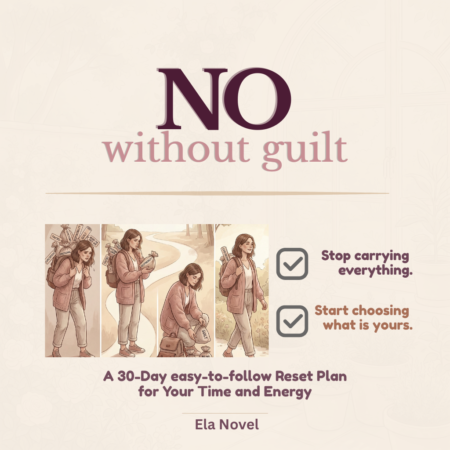
If this resonated, if you recognised the smile you have been wearing in rooms you did not want to be in and the drain that follows you home from places you went because saying no felt harder than going, NO Without Guilt is a calm, practical 30-day reset designed to help you change that pattern.
Not to make you less warm or less present for the people who matter. But to help you become more intentional about where your presence goes and to protect enough of it for the places where you can actually be yourself.
Through short daily reflections and simple actions, it helps you:
✓ Recognise the pattern of showing up out of obligation rather than genuine choice
✓ Create a pause before automatically saying yes to invitations
✓ Find warm, clear ways to decline without excessive guilt or explanation
✓ Notice which social occasions fill you and which consistently drain you
✓ Build the habit of protecting your presence for the people and places that deserve it
You do not have to keep showing up where you cannot fully be yourself. Start choosing differently now.
Ela’s Love Life Stories is a space for women 40+ who are ready to reclaim their time, their energy, and themselves — not loudly, not dramatically, but quietly and consistently, one small shift at a time.
If this felt true to you — share it with a woman who needed to read it today.