You have the right to be heard. Not advised. Not fixed. Just heard. When you do not have that space, you learn to hold everything in. Here is how to stop holding everything in and start choosing yourself now.
Women who exercise their right to be heard do not need more people around them. They need the right space. This post shows you what it costs to keep holding everything in and how to start creating the space where you can finally be yourself.
Did You Know You Have the Right to Be Heard?
Not answered. Not advised. Not have someone turn your story into theirs. Not interrupted before you have finished.
Just heard.
By someone who simply shows up present. Who does not jump to solutions or comparisons or the thing that happened to them that one time. Who just listens. Really listens. With full attention and no agenda and no quiet impatience to get to the part where they say something.
Can you remember the last time that happened?
Not a conversation where you did all the listening. Not a catch-up that turned into an hour of someone else’s problems. Not an interaction where you started to say something and then redirected yourself because the room did not quite feel safe enough for the real version of what you wanted to say.
A conversation where someone heard you. Fully. Without you adjusting yourself.
If that feels like a long time ago, this post is for you.
What It Means to Have the Right to Be Heard
Your right to be heard is not about demanding attention or taking up more space than you deserve.
It is about something much simpler and much more fundamental.
It is the right to say what is actually on your mind without editing it first. To share what you are thinking, planning, hoping, worrying about, without translating it into something more palatable or less demanding or easier for the other person to receive.
It is the right to be the one talking sometimes. To have your thoughts followed up on. To be asked how you are and have the person asking genuinely wait for the answer rather than pivoting to their own update the moment you pause.
It is the right to exist in a conversation as a full person rather than as the supportive presence that holds space for everyone else while holding everything of your own quietly inside.
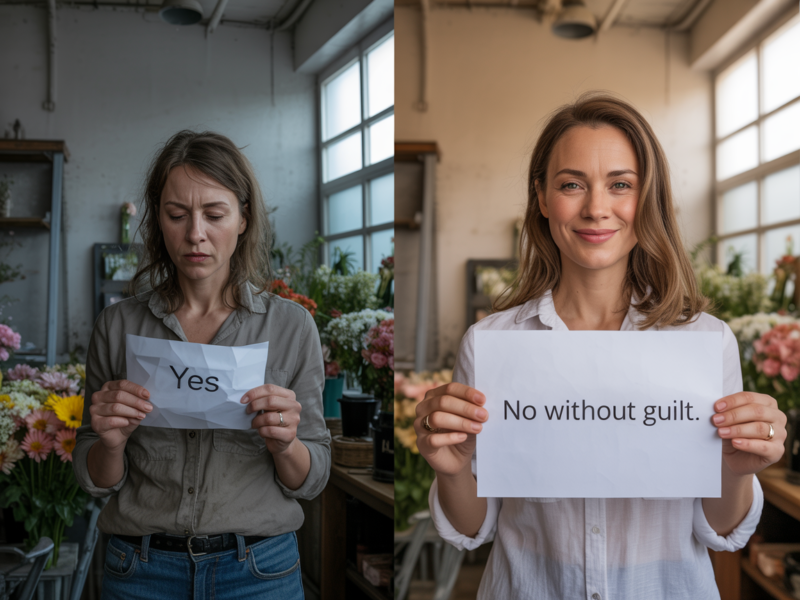
Most women who have spent years being the listener, the supporter, the one who shows up for everyone else, have quietly stopped exercising their right to be heard. Not because they decided to. Because the habit of not taking up space became so automatic that they stopped noticing it was a habit and started believing it was simply who they are.
It is not who you are. It is what you learned to do. And it can be unlearned.
Why Women Stop Claiming Their Right to Be Heard
It did not happen all at once. It happened through a series of small moments that each seemed reasonable and that nobody intended to add up the way they did.
You started to say something and the conversation moved on before you finished. So the next time you thought about saying it, you hesitated a little longer before starting.
You shared something important and someone gave you advice you did not ask for, or compared your situation to someone else’s in a way that made your thing feel smaller. So the next time you kept the important thing a little more to yourself.
You noticed that certain people in your life could not quite hold the real version of your thoughts safely. So you built a contained version of yourself, lighter and easier and less demanding, and you brought that version to those interactions instead.
And over time, the contained version took over as the default. Not because you wanted to hold everything in. But because it felt safer. Less risky. Less likely to produce a response that made you wish you had stayed quiet.
Until one day you realise that you have held so much in for so long that you are not entirely sure what the uncontained version of you would even say if she finally had the space to say it.
What Holding Everything In Actually Costs You
The cost of not having your right to be heard is not always dramatic. But it is real and it accumulates.
You become invisible to yourself. When you consistently edit your thoughts before expressing them, when you regularly translate what you actually think into something more acceptable, you gradually lose clear access to your own inner experience. The real thoughts remain. But the habit of suppressing them makes them harder to reach.
Your relationships become shallower than they need to be. Connection requires reciprocity. When you always listen and never get heard, when you always support and never receive support, relationships stay at a level of warmth and companionship that never quite reaches genuine intimacy. You show up fully. But nobody fully sees you.
The things you want stop feeling real. Your plans. Your desires. Your ideas about what you want your life to look like. These need to be spoken to become solid. When you keep them inside, held quietly and privately and unexpressed, they stay vague and easy to dismiss and easy to keep postponing.
You become exhausted in a particular way. The exhaustion of holding everything in differs from ordinary tiredness. It is the exhaustion of constant self-management. Of always making space for others rather than anyone making space for you. Research on https://time.com/6319549/silencing-women-sick-essay/ consistently shows that women who regularly suppress their thoughts, plans and desires in social situations report significantly higher levels of anxiety, loneliness and disconnection over time, even when people surround them. You learn to hold everything in. But the holding costs you.
You Do Not Need a Crowd. You Need One Safe Space.
Here is the thing about your right to be heard that most people do not say clearly enough.
You do not need many people to give it to you. You do not need a large social circle or a perfectly curated group of friends who all show up for you in exactly the right ways.
You need one safe space. One relationship, one conversation, one regular interaction where the real version of you is welcome. Where you do not have to edit yourself before entering. Where the other person receives what you think and feel and want and plan without judgment and without immediately redirecting it into advice or comparison or their own story.
One space where you genuinely, regularly and consistently exercise your right to be heard.
That space might already exist in your life and simply need more deliberate use. Or it might need to be built. Through choosing more carefully who you give your real self to. Through asking more of the relationships that could hold more if you let them. Through creating the conditions, internal and external, where holding everything in is no longer something you need to do.
5 Ways to Start Exercising Your Right to Be Heard
You do not need to make dramatic announcements or overhaul your social life. You need small, consistent steps toward the space where you can be yourself.
1. Notice when you are editing yourself. Before you can stop holding everything in, you need to see clearly when you are doing it. This week, pay attention to the moments when you start to say something and pull back. When you translate what you actually think into something lighter or easier. Just notice. That noticing is the beginning.
2. Identify the one person who might be safe. Not perfect. Not someone who gets it right every time. Just someone who has, on occasion, made you feel genuinely heard. Who has asked how you are and waited for the answer. Who has followed up on something you mentioned. Start there.
3. Start small. You do not have to immediately share the deepest, most held thing. Start with something one layer deeper than you would usually go in that relationship. Something a little more real than the edited version. See what happens. Build from there.
4. Ask for what you need explicitly. “I do not need advice right now. I just need to think out loud for a moment.” Most people, when you tell them clearly what would actually help, can provide it more readily than you might expect. Claiming your right to be heard sometimes means naming what being heard looks like for you.
One More Step Toward Your Right to Be Heard
5. Give yourself the space first. Before others can hear you, practice hearing yourself. Write it down. Say it out loud in private. Let the unedited version of your thoughts exist somewhere, even if only for you. When you practise expression, even privately, the habit of suppression loosens its grip.
You Are Allowed to Stop Holding Everything In
You are allowed to take up space in a conversation. You are allowed to be the one whose thoughts someone follows up on. You are allowed to share what is actually on your mind rather than the lighter, easier, less demanding version of it.
Your right to be heard is not something you earn through having sufficiently important things to say. It is not something you get to claim only after you have listened enough to everyone else.
It is simply yours. As a person. As a woman who has been giving her attention and her presence and her careful, warm listening to the people around her for years.
You are allowed to have some of that come back toward you.
Not in a crowd. Not necessarily with many people. Just in one safe space where you can finally stop holding everything in.
And when you find that space, or build it, or claim it, something will begin to return.
Not all at once. But gradually, quietly, the things you have been holding start to move again.
Your thoughts. Your plans. Your desires.
The version of you that has been waiting to be heard.
Your Next Step — 30 Days to Stop Holding Everything In
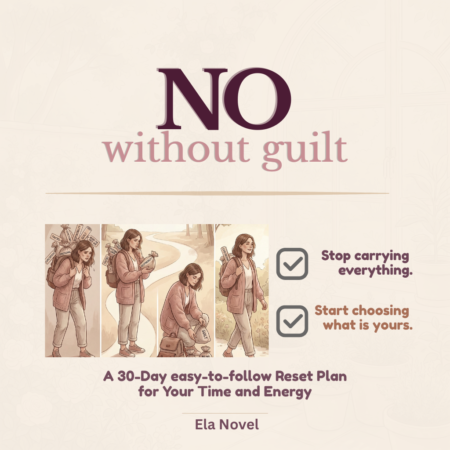
If this resonated, if you recognised the pattern of holding everything in and the particular exhaustion of always being the one who listens rather than the one who is heard, NO Without Guilt is a calm, practical 30-day reset designed to help you change that.
Not to make you demand more or take up more space than feels comfortable. But to help you become more intentional about where your presence goes and to protect enough of it for the spaces and the people where you can finally be yourself.
Through short daily reflections and simple actions, it helps you:
✓ Recognise the pattern of editing yourself before you even begin to speak
✓ Identify the relationships where your right to be heard could be exercised more
✓ Find the words for asking for what you actually need from the people around you
✓ Release the habit of containing yourself in rooms where it is not actually necessary
✓ Build the daily practice of choosing yourself, starting with being heard by yourself first
You have the right to be heard. Stop holding everything in. Start now.
Ela’s Love Life Stories is a space for women 40+ who are ready to reclaim their time, their energy, and themselves — not loudly, not dramatically, but quietly and consistently, one small shift at a time.
If this felt true to you — share it with a woman who needed to read it today.