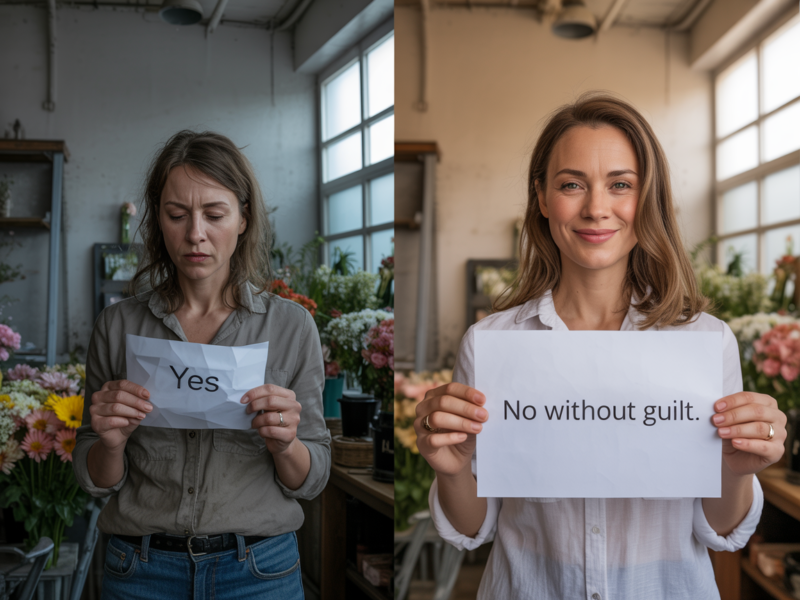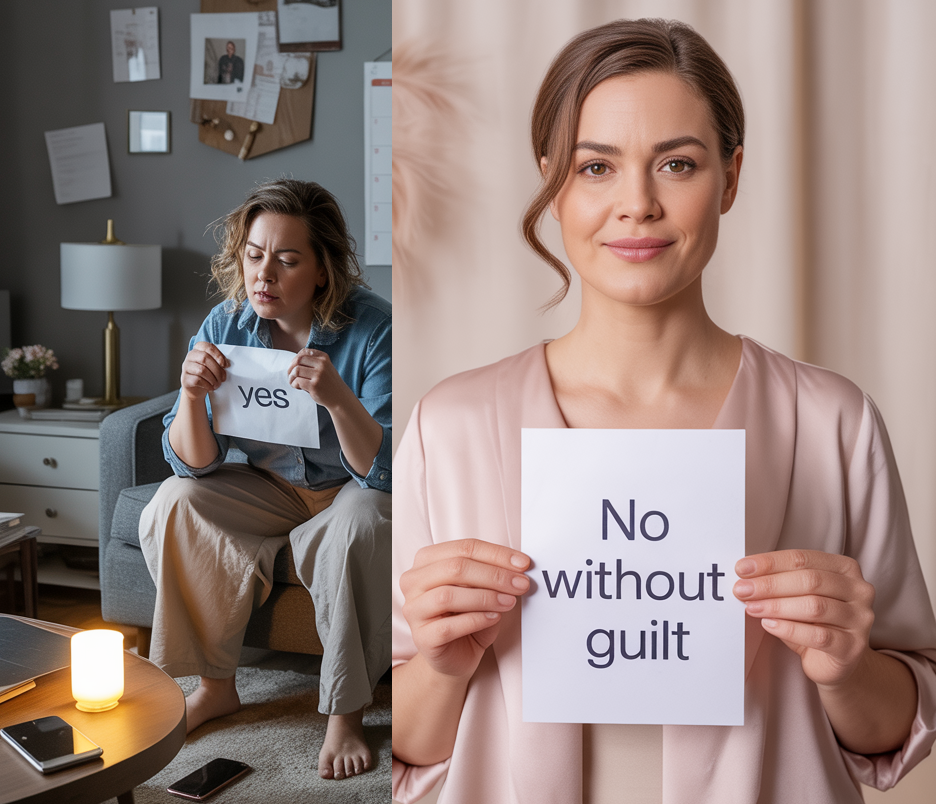
The weight you have been carrying for years was never meant to be yours. Women over 40 who put it down do not stop caring. They stop carrying what was never theirs. Here is how to begin now.
Women who put down the weight they were never meant to carry do not become less loving. They become more present. This post shows you exactly what that weight contains, why it is so hard to release, and how to start letting it go today.
You Did Not Notice It Happening. That Is the Most Honest Thing About It.
It was not a single moment. There was no morning you woke up and decided to carry it all.
It accumulated. Quietly. Over months and years and decades of small yeses that seemed reasonable at the time. Each one individually manageable. Collectively crushing.
And somewhere in the middle of all that carrying, something changed.
Not dramatically. Not in a way that announced itself.
You just started feeling different.
Older than your age. More tired than the day should explain. More tense in your body than you remembered being. Less like the version of yourself you recognised.
You told yourself it was time. You told yourself it was age. You told yourself it was just the season of life you were in and that eventually it would get lighter.
But it did not get lighter.
Because the weight was not coming from time or age or circumstance. It was coming from everything you had been carrying that was never truly yours to hold.
The Weight Nobody Talks About
There is a particular kind of weight that women carry. And it is almost never talked about directly.
Not the physical weight of the work itself. The cooking, the cleaning, the logistics, the endless practical management of a life shared with other people.
But the invisible weight underneath it.
The weight of always being the one who notices. The weight of carrying other people’s emotions so they do not have to feel them fully themselves. The weight of the constant background hum of responsibility for everyone’s comfort, everyone’s needs, everyone’s smooth passage through their day. The weight of the automatic yes that you said so many times it stopped feeling like a choice and started feeling like just who you are.
This weight does not show up on any scan. Nobody can see it from the outside. From the outside, you probably look like someone who has it together. Capable and reliable and warm.
And you are all of those things.
But underneath the capability and the reliability and the warmth, you are also exhausted.
And the exhaustion is not weakness. It is the completely logical result of carrying something heavy for a very long time.
How the Carrying Starts and Why It Is So Hard to Stop
Most women who carry too much did not arrive there through carelessness. They arrived there through love.
Through genuinely caring about the people around them. Through wanting to help, to smooth things over, to make sure everyone was alright. Through being the kind of person who shows up, reliably and warmly and without being asked, because showing up is simply who they are.
And because they showed up so consistently, the people around them stopped thinking to ask whether they wanted to. The showing up became assumed. The carrying became expected. The yes became automatic on both sides.
The woman stopped asking herself whether something was hers to carry. The people around her stopped asking whether she wanted to carry it. And the weight kept growing.
Quietly. Without drama. One small addition at a time.
Until the day she sat with herself honestly, perhaps for the first time in years, and asked a question she had not allowed herself to finish before.
How much of what I am carrying actually belongs to me?
What Happens When Women Carry Too Much for Too Long
The effects of carrying too much are real and cumulative. They show up differently in different women but the pattern is consistent. Research on chronic overextension and burnout in women consistently shows that women who carry responsibilities beyond their own for extended periods experience measurable declines in energy, emotional presence and sense of self, often without recognising the cause.
The energy disappears first. Not all at once. Gradually. The reserves that used to replenish overnight start taking longer to recover. The tiredness that used to be fixed by a good night’s sleep starts persisting into the next day and the next.
Then the presence goes. You are physically there, at the dinner table, in the conversation, at the gathering, but you are not fully inside the moment. Part of you is always somewhere else. Managing. Planning. Running the background programme of everyone else’s needs even when you are supposed to be resting.
Then the sense of self quietly fades. The things you used to enjoy feel distant or inaccessible. The desires and interests and small pleasures that used to be part of who you are get buried under the weight of everything else. You stop being able to answer the question: what do I want?
And finally the resentment arrives. Low-level, uncomfortable, guilt-inducing resentment. Not at any one person. Just a quiet accumulation of feeling unseen and unequally burdened, followed immediately by guilt for feeling it, because the people around you love you and mean well.
But you do feel this way. And the feeling is not a character flaw. It is information.
The Moment Something Shifts
For most women, the shift does not come from a dramatic confrontation or a moment of crisis.
It comes from a pause.
A single moment, unremarkable from the outside, where instead of automatically saying yes, something in her hesitates.
Just for a second. Just long enough to ask:
Is this actually mine?
Not: can I do this? Not: will someone be disappointed if I do not? Just: is this mine to carry?
And for the first time, she waits for an honest answer.
That pause, that one small moment of genuine choice, is where everything begins to change.
Not overnight. Not perfectly. But enough to notice.
What Returns When You Put the Weight Down
Women who begin asking honestly what is theirs and gradually releasing what is not describe the same experience consistently.
The energy comes back. Not all at once. But in small, noticeable increments. A morning that feels different. An evening that does not end in exhaustion. A weekend that leaves her feeling rested rather than depleted.
The presence returns. She begins to be genuinely inside her own moments again. Present at the dinner table. Present in the conversation. Present in her own life, not just managing it from a distance.
The sense of self resurfaces. The things she used to enjoy begin to feel accessible again. The question what do I want? starts to have answers. Small ones at first. But answers.
And something unexpected arrives. A quietness. Not emptiness but a different kind of fullness. The particular peace that comes not from having everything sorted but from no longer carrying what was never hers to sort in the first place.
She comes back. Not as she was before. But as someone who has made space for herself. Someone who has learned, gently and imperfectly and consistently, to ask before she carries.
5 Questions to Ask Before You Say Yes
The shift begins with a pause. And the pause becomes more natural when you have questions to fill it with. Here are five worth asking honestly before your next automatic yes.
1. Is this genuinely mine to carry? Not: could I carry it? Not: am I capable? But: does this actually belong to me? Was it ever meant to be mine?
2. What will this cost me? Not just in time but in energy, in presence, in the parts of myself I will have less of if I say yes. Is the cost proportionate to the value?
3. Who else could carry this? Is there someone for whom this responsibility would be more appropriate? Or has it simply landed on me because I have always been willing to pick things up?
Two More Questions Worth Asking
4. What am I saying no to if I say yes to this? Every yes is also a no to something else. What is the something else? Is it something that matters to me? Is it worth the trade?
5. What would I tell a woman I love if she were in this situation? The advice you would give to a friend, firmly and lovingly and without hesitation, is the advice you deserve to give yourself.
You Were Never Meant to Carry It All
This is the truth at the centre of everything on this page.
You were never meant to carry it all.
Not because you are not capable. You clearly are. Not because the people around you do not need you. They do, and you love them for it.
But because a life built entirely around carrying other people’s weight leaves no room for the weight of your own living. Your own wanting. Your own being.
You deserve to be here, fully and presently as yourself, not just as the person who holds everything together for everyone else.
The weight that has been making you feel older, more tired, less like yourself, much of it was never yours.
And you are allowed to put it down.
Not all at once. Not with drama or confrontation or a wholesale renegotiation of every relationship in your life.
Just quietly. Gradually. One honest pause at a time.
Your Next Step — 30 Days to Put the Weight Down
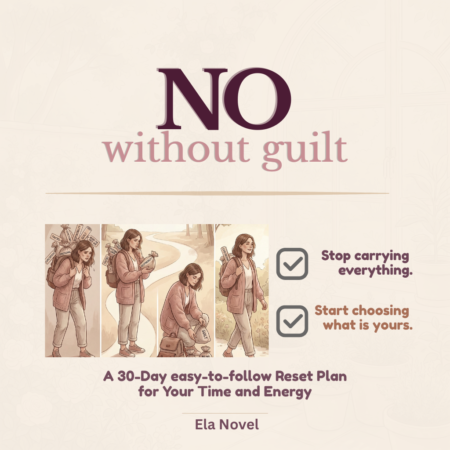
If this resonated, if you recognised the weight and the exhaustion and the quiet disappearance of yourself in these words, NO Without Guilt is a calm, practical 30-day reset designed to help you make this shift consistently.
Not to make you less caring or less present for the people you love. But to help you become more intentional about what you carry, what you agree to, and what you finally, quietly, begin to release.
Through short daily reflections and simple actions, it helps you:
✓ Identify the weight you have been carrying that was never truly yours
✓ Create a genuine pause before the automatic yes
✓ Begin releasing responsibilities that do not belong to you
✓ Protect your energy and presence without guilt or confrontation
✓ Return to yourself as someone who finally makes space for herself
You keep your love. You finally put down the weight. Start now.
Ela’s Love Life Stories is a space for women 40+ who are ready to reclaim their time, their energy, and themselves — not loudly, not dramatically, but quietly and consistently, one small shift at a time.
If this felt true to you — share it with a woman who needed to read it today.