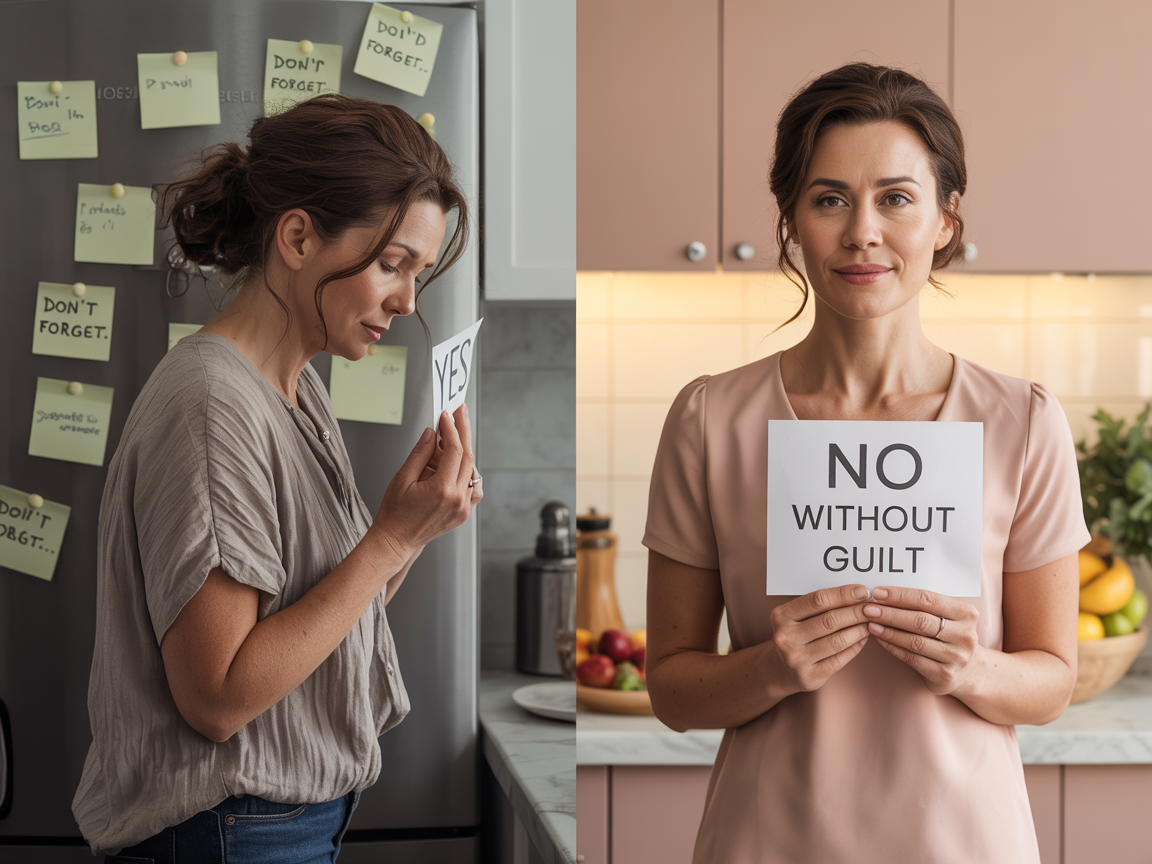
You became the unofficial memory, reminder and answer for everyone around you. Nobody asked. It just happened. And it is costing you more than you know.
Women who stop being everyone’s memory do not stop being helpful. They stop being available by default. This post shows you exactly how to step out of a role you never agreed to starting now.
They Could Look It Up. They Come to You Instead.
What time was that again? Can you remind me? Did you check this for me? Do you know where the…? Can you just quickly…?
Sound familiar?
These are not emergencies. They are not complex problems that need your particular expertise or your unique ability to solve things.
They are questions a thirty-second search would answer. Tasks the person asking could handle with minimal effort. Reminders the person who needs reminding could set on the phone already in their hand.
But they do not look it up. They do not handle it. They do not set the reminder.
They come to you.
Not because they cannot. But because they know you will.
And you do. Every time. Reliably, warmly, efficiently. Because that is who you are and because it feels easier in the moment than the alternative.
Until the moment you stop and actually count how many times a day this happens.
And realise that you have become, without ever agreeing to it, the unofficial information centre, memory bank and administrative support system for the people around you.
Not because you applied for the role. Because you were good at it. And available. And nobody ever thought to question the arrangement.
How the Role Gets Assigned Without Anyone Deciding
Nobody sits down and decides: she will be the one who remembers everything. She will carry the mental load of tracking all the details so the rest of us do not have to.
It happens gradually. Through a series of small moments that each seem entirely reasonable on their own.
You answered a question once, quickly and correctly, without making a fuss. So the next question came to you too.
You remembered something someone else forgot and mentioned it kindly because that is who you are. So the next time they needed to remember something, they outsourced the remembering to you.
You tracked a detail that would have slipped through the cracks if you had not caught it. The relief in the room was palpable. So the tracking became yours.
One small delegation at a time, the role solidified.
And now it is simply assumed.
You are the one who knows. The one who tracks. The one who remembers. The one who can be asked anything at any time and will produce the answer without complaint.
From the outside it looks like a superpower. From the inside it feels like a job nobody is paying you for.
What Being Everyone’s Memory Actually Costs You
The individual asks seem small. What time was that again? takes thirty seconds. Can you remind me? barely registers as an interruption.
But the cost is not in any single question. It is in the cumulative weight of being the person all the questions come to.
Your mental load never switches off. When you track everything for everyone, your brain runs a constant background programme. The appointments, the reminders, the details, the follow-ups. It is not a conscious effort. But it is constant. Research on cognitive load and mental fatigue in women shows that this kind of background tracking produces the same level of mental fatigue as active focused work. Not dramatically, but persistently, in a way that accumulates without announcement.
Your attention is always available to others and rarely to yourself. Every question is an interruption. Of your train of thought. Your task. Your moment of quiet. When you are the person everyone comes to, the interruptions are frequent enough that sustained focus on your own needs becomes genuinely difficult.
You become responsible for other people’s functioning. When someone relies on you to remember something they should track themselves, you quietly take on a responsibility that was never yours. And when the thing gets forgotten, because occasionally even you cannot track everything, that weight somehow lands on you too.
The role expands. Roles that go unquestioned tend to grow. Once you answer the small questions, the larger ones start arriving. Once you remember the appointments, the logistics follow. The role that began as a small accumulated habit gradually consumes a significant portion of your daily cognitive and emotional energy.
And still, because you are who you are, you manage it. Quietly. Without complaint. While something inside you grows a little more tired.
Why Stepping Out Feels So Hard
Understanding the obstacle honestly is the first step toward clearing it.
It feels unkind not to answer. When someone asks you something they could easily find out themselves, refusing feels disproportionately harsh. They are not being malicious. They just need something. And you know the answer. Surely it is easier to just… Yes. It is easier in the moment. But the moment is not the problem. The pattern is.
You have become efficient at it. The questions come to you because you answer them faster and more reliably than anyone else. Your own efficiency created the demand. Stopping feels like a strange kind of self-sabotage.
You are not sure what happens if you stop. Will things fall apart? Will people manage without you? The uncertainty of stepping back, combined with the certainty that you can handle it, keeps you in the role.
It feels like your identity. Being the one who knows is part of how you understand yourself. Stepping out raises a question you may not be ready to sit with: who am I if I am not the one who holds everything together?
The answer, when you find it, is usually: someone with considerably more time and energy than before.
How to Step Out of the Role — Quietly and Gradually
This is not about refusing to help. It is not about becoming cold or unhelpful. It is about gently stepping out of a role you never formally agreed to, one small moment at a time.
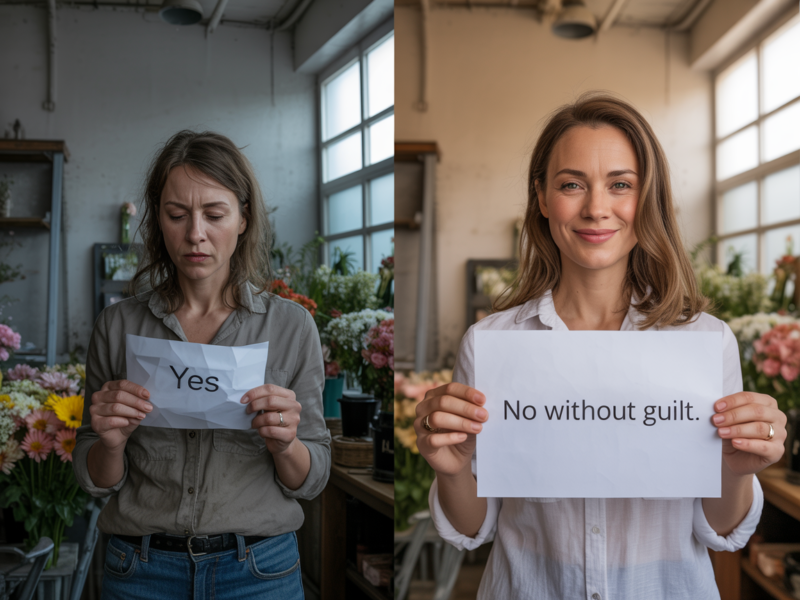
Redirect instead of answer. When someone asks something they could find out themselves, try redirecting instead. “I am not sure. Have you checked the calendar?” Or simply: “I think you could find that faster than me.” Warm. Unhelpful in the immediate term. Genuinely helpful in the longer one.
Let the pause do the work. Before you answer, pause. Just long enough to ask yourself: is this mine to answer? Could this person find this out themselves? Sometimes the pause alone is enough. The person who asked fills it themselves because they were capable all along.
Return the responsibility. When someone asks you to remind them of something, try: “Could you set a reminder on your phone? I am trying not to be everyone’s calendar right now.” Said warmly, without drama, without apology. Just honestly.
Two More Ways to Stop Being Everyone’s Memory
Stop volunteering information proactively. Much of the unofficial role gets maintained not just by answering questions but by offering information before anyone asks. The unprompted reminder. The detail you mention because someone might need it. Try not volunteering. Try letting some things be someone else’s responsibility to notice. See what happens.
Name the pattern once, gently. With the people who ask the most, one honest conversation can shift more than months of quiet redirection. Not a complaint. Just an observation. “I have noticed I have become the person everyone asks everything. I am trying to step back from that. Can we work on tracking some of this together?”
What Happens When You Stop Being the Answer
The first thing that happens is discomfort, yours and theirs.
Yours: the guilt of not being immediately helpful. The anxiety of not knowing whether things will be managed. The unfamiliarity of not being the one who holds it all.
Theirs: the mild surprise of a question that does not get immediately answered. The slight inconvenience of having to find something out themselves.
Both pass.
What comes after is more interesting.
Most of the people around you rise to meet the gap. They find the answer. They set the reminder. They track the detail. Not because they suddenly became more capable, but because the option of outsourcing it to you is no longer as available as it was.
And you discover something that surprises you.
The mental load lightens.
Not dramatically. Not all at once. But in small, noticeable ways. A morning with fewer interruptions. An afternoon where your attention stays on your own work. An evening where the background programme of everyone else’s details runs quieter than usual.
Space appears. Small at first. But real.
In that space, you begin to remember what it feels like when your mind is your own.
You Were Never Supposed to Be Everyone’s Answer
This is worth saying clearly because most women in this role have never heard it stated directly.
You are not Google. You are not a calendar. You are not an administrative support system or a memory bank.
You are a person. A person with her own thoughts to think, her own work to do, her own attention to direct, her own mental resources that are finite and valuable and deserving of protection.
The role you have been playing was never formally assigned to you. It accumulated through your competence, your availability and your consistent willingness to be the one who answers.
And because it accumulated without agreement, it can be released without drama.
Quietly. Gradually. One redirected question at a time.
Not because you are no longer willing to help. But because you have finally recognised that being the answer for everyone else has been coming at the cost of being present for yourself.
And that cost is no longer one you are willing to pay automatically.
Your Next Step — 30 Days to Step Out of the Role
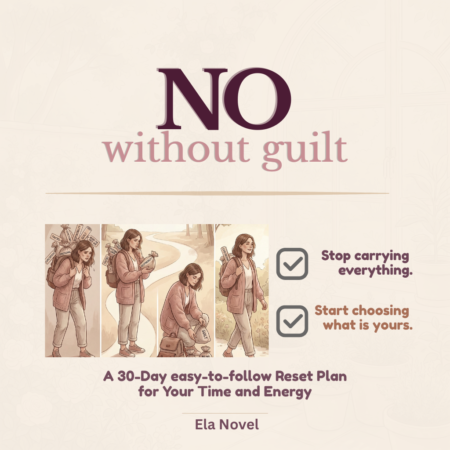
If this resonated, if you recognised the unofficial role and felt the weight of it, NO Without Guilt is a calm, practical 30-day reset designed to help you step out of it.
Not to become unhelpful or less present for the people you love. But to become more intentional about what you answer, what you track, what you carry and what you begin returning to the people it actually belongs to.
Through short daily reflections and simple actions, it helps you:
✓ Recognise the unofficial roles you accumulated without agreeing to them
✓ Create a pause before automatically answering and absorbing
✓ Redirect questions and responsibilities with warmth and clarity
✓ Release the mental load that was never formally yours
✓ Protect your attention and your cognitive space without guilt
You keep your warmth. You finally keep your mind too. Start now.
Ela’s Love Life Stories is a space for women 40+ who are ready to reclaim their time, their energy, and themselves — not loudly, not dramatically, but quietly and consistently, one small shift at a time.
If this felt true to you — share it with a woman who needed to read it today.h. You finally keep your mind too.