It feels faster to do it yourself. But the cost of always doing it yourself is making you exhausted. This post shows you how to stop doing everything yourself and build a fairer arrangement starting now.
Women who stop doing everything themselves do not lower their standards. They raise their expectations. Here is how to make the same shift without the argument you have been dreading.
You Know Exactly How the Calculation Goes
Someone else could do it. In theory.
But they would do it differently. Or more slowly. Or not quite right. Or you would have to explain it first, then wait, then check, then possibly redo parts of it anyway. By the time all of that happened, you could have done it three times over and moved on to the next thing on the list that never gets shorter.
So you do it yourself. Again.
Because it is faster. Because it is easier. Because the effort of asking and explaining and waiting and accepting an imperfect result genuinely feels, in the moment, greater than the effort of simply absorbing the task yourself.
The logic is completely sound.
And it is also keeping you exhausted.
Because the calculation you are making, faster if I do it, easier if I do it, less friction if I do it, measures the cost of asking against the cost of doing and concludes that doing is cheaper.
What it does not measure is the cumulative cost of always being the one who does.
The tasks that became yours not because you chose them but because you stopped insisting they could belong to someone else. The normal that established itself so gradually you did not notice until it had been in place for years. The person you became, capable, efficient, indispensable and quietly running on empty, because the faster option, chosen consistently enough, became the only option.
It is not too late to stop doing everything yourself.
How Doing It Yourself Became the Only Option
It did not start as a resignation. It started as a practical decision, probably a correct one, in the moment it was first made.
You were tired. The thing needed doing. Asking would have taken longer than doing. So you did it. Sensibly. Without drama.
But practical decisions made consistently solidify into arrangements. And arrangements, left unexamined long enough, become normal. And normal, as you have discovered, does not always mean fair.
The first time you did it yourself because it was faster, it was a reasonable choice. The tenth time, it was a habit. The hundredth time, it was an expectation on both sides.
You stopped asking because asking felt like more work than doing. The people around you stopped offering because you never seemed to need them to. The tasks settled into their places, yours and also yours, and the arrangement hardened into something that looked, from the outside, like simply the way things were.
Not an injustice. Not a deliberate imposition. Just a pattern. Built from repeated small decisions that each seemed reasonable and whose cumulative effect was never intended.
But the pattern has a cost. And you are the one paying it.
What Always Doing It Yourself Actually Costs You
The word normal is worth examining carefully. The things that feel most normal are often the things we have stopped questioning.
It feels normal to be the one who does the dishes because you have been doing them for so long that the alternative seems strange. It feels normal to absorb the laundry and the household management and the small daily tasks that never stop. But normal is not the same as fair. And normal, when it is built from thousands of faster-if-I-do-it decisions, is not the same as inevitable.
Time that could have been yours. Every task you absorb because it is faster is time that does not belong to you. Minutes, hours, eventually whole afternoons and evenings that could have been spent on something that fills you rather than drains you. Simply gone.
The chance for others to grow. When you always do it yourself because it is faster, you remove the opportunity for the people around you to develop competence and ownership. The explanation that feels like more work than doing becomes, over time, an investment in a different arrangement. But you never make the investment because the immediate cost always feels too high.
Your sense of fairness. Somewhere underneath the efficiency and the just-getting-it-done attitude, a woman notices that the effort is not equal. She feels, quietly and uncomfortably, that something about the arrangement is not right. That resentment is information. It deserves to be taken seriously.
The relationship itself. When one person does everything and the other does very little, even when the imbalance was never intended, the relationship gradually carries a weight it was never designed to hold. The resentment that never gets named. The disconnection that grows from an arrangement nobody chose but everybody lives inside.
Why Changing the Pattern Feels So Hard
If changing it were simple, you would have changed it already. Understanding why it is not simple is the first step toward changing it anyway.
The short-term cost of asking feels too high. The explanation required. The waiting. The result that is not quite how you would have done it. These costs are real, immediate and visible. The long-term cost of never asking, the exhaustion, the resentment, the entrenched imbalance, is diffuse, cumulative and easy to keep deferring.
Your own efficiency created the problem. The questions and tasks come to you because you handle them faster and more reliably than anyone else. Your capability made stopping feel like self-sabotage.
The pattern is comfortable for everyone except you. The people who benefit from the current arrangement are not experiencing a problem. Their needs get met reliably without managing the logistics themselves. So the pressure to change the pattern comes entirely from you. Research on household task distribution and relationship satisfaction consistently shows that women who carry the majority of household tasks report significantly lower relationship satisfaction over time, even when both partners consider the arrangement acceptable. Changing something alone, against the inertia of an established normal, is genuinely hard.
Previous attempts did not work. Efforts to redistribute the load may have ended in tension, a brief improvement followed by a gradual return to the old pattern. The experience of trying and not quite succeeding makes the next attempt feel less worth it.
All of this is real. None of it means the pattern cannot change.
How to Stop Doing Everything Yourself — Without the Argument You Are Dreading
The goal is not a single dramatic conversation that fixes everything overnight. The goal is a gradual, consistent shift in the pattern built from small decisions repeated until a new normal forms.
Stop pre-empting. The task you do before anyone notices it needs doing, the one you have been doing so long nobody else has had a chance to notice, stop doing it proactively. Let it wait. See who notices. See what happens.
Ask once, clearly, and then stop. Instead of hinting or asking multiple times with increasing frustration, ask once, specifically and warmly, and then genuinely let it go. “Could you put the laundry on while I make dinner?” Once. No follow-up. No redoing it if it does not happen. Let the consequence of it not happening land naturally.
Accept the different result. This is the hardest step. When someone does a task differently from how you would have done it, less neatly, less efficiently, leave it. Do not redo it. Do not adjust it in front of them. The imperfect result, accepted without correction, is the beginning of a new arrangement. The perfectionism, however understandable, is part of what keeps everything yours.
Two More Steps That Change the Dynamic
Name the pattern once, without blame. Not during a moment of frustration. In a calm, ordinary moment. “I have been thinking about how most of the household tasks have ended up with me. I would like us to share them more evenly. Can we talk about how to do that?” Not a complaint. A proposal. One honest conversation that opens a renegotiation.
Invest in the explanation. The teaching that feels like more work than doing, try reframing it. It is not more work than doing. It is a different kind of work, done once, that changes the arrangement permanently. The explanation given today means the task is not yours tomorrow. Or the day after. Or the day after that.
The Version of You on the Other Side
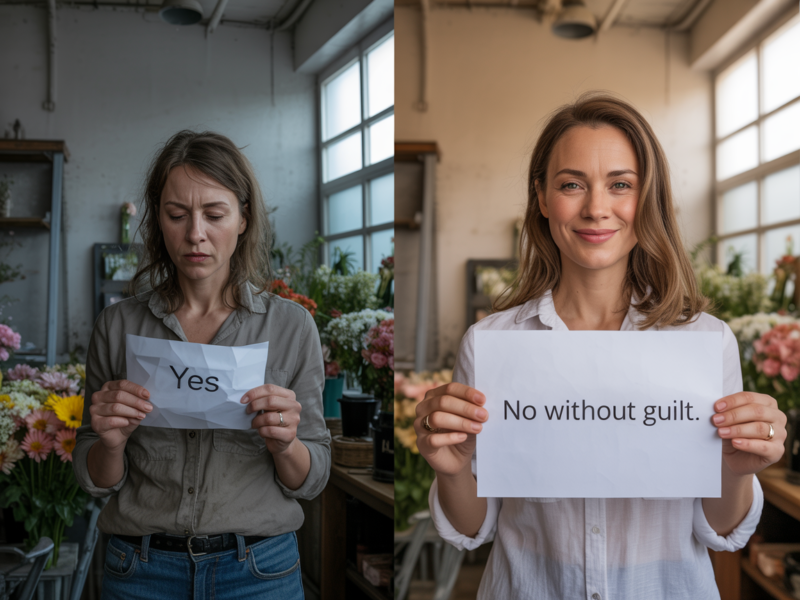
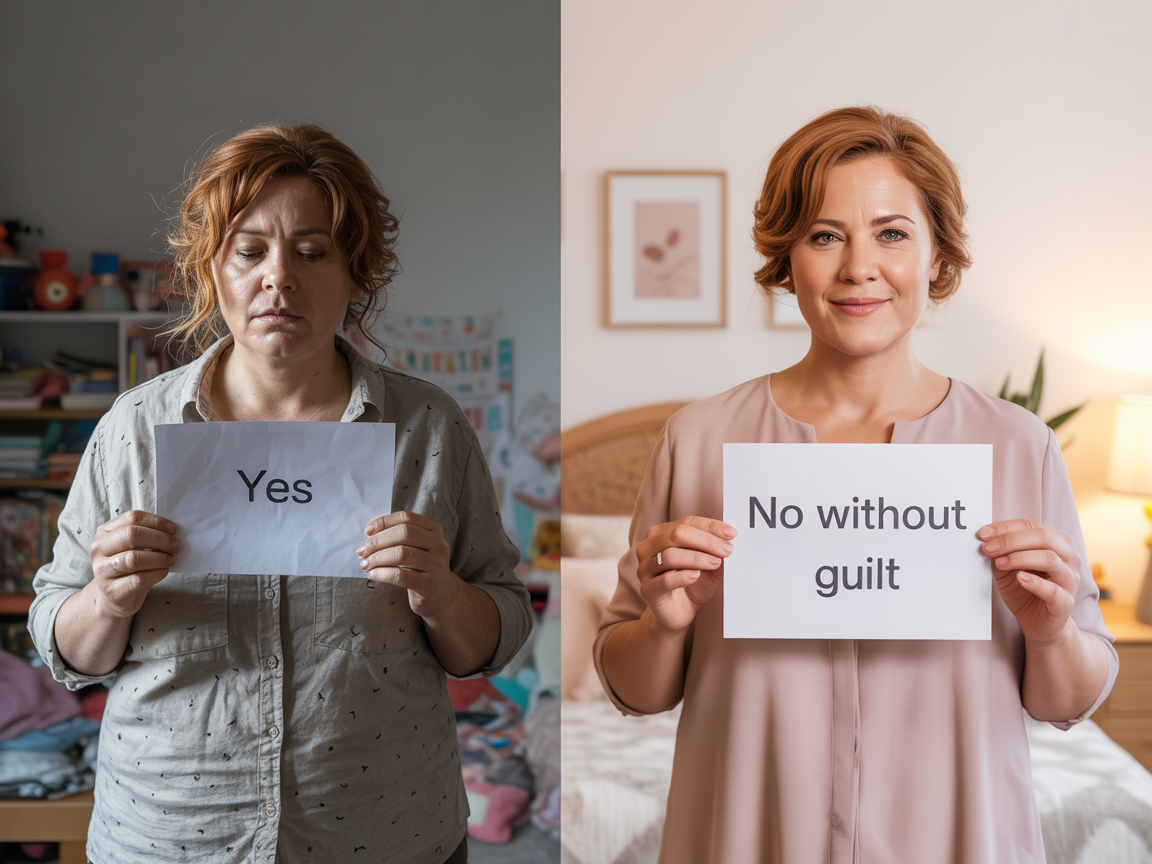
Two versions of you exist in this story.
The first stands in a room that reflects everything she has absorbed. Every task, every responsibility, every faster-if-I-do-it decision accumulated into an arrangement nobody chose but everybody lives inside. She is capable. She is reliable. She is exhausted.
She holds a yes she gave not because she wanted to but because the alternative seemed harder.
The second version made a different calculation.
Not because her life became easier overnight. Not because the people around her transformed immediately or the new normal established itself painlessly. But because she decided, quietly and without drama, one task at a time, that the short-term cost of asking was worth paying for the long-term relief of not always being the one who does.
She stands in a room that feels different. Lighter. More evenly distributed. More like a life that belongs to more than one person.
She is at peace in a way the first version, efficient and capable and always doing it faster herself, never quite was.
Both versions are the same woman. The only difference is the decision she made about what normal was allowed to look like.
Your Next Step — 30 Days to a Different Normal
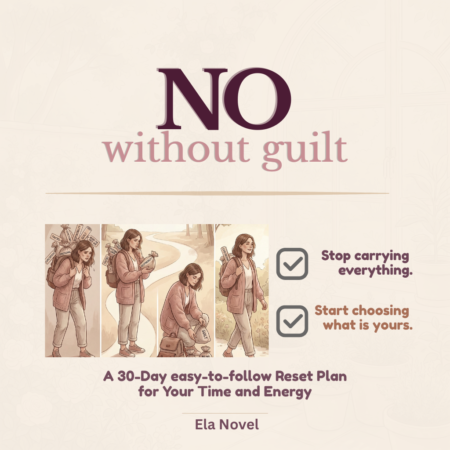
If this resonated, if you recognised the faster-if-I-do-it calculation and felt the weight of the normal it created, NO Without Guilt is a calm, practical 30-day reset designed to help you shift the pattern.
Not through confrontation or dramatic ultimatums. Through small, consistent daily decisions that gradually build a different arrangement.
Through short daily reflections and simple actions, it helps you:
✓ Recognise the tasks you absorbed without formally agreeing to them
✓ Create a pause before the automatic doing
✓ Find warm, clear ways to ask for help that do not create defensiveness
✓ Accept imperfect results without immediately correcting them
✓ Build a new normal, gradually and consistently, without losing your kindness
Normal does not always mean fair. But it can be changed. Start now.
Ela’s Love Life Stories is a space for women 40+ who are ready to reclaim their time, their energy, and themselves — not loudly, not dramatically, but quietly and consistently, one small shift at a time.
If this felt true to you — share it with a woman who needed to read it today.